
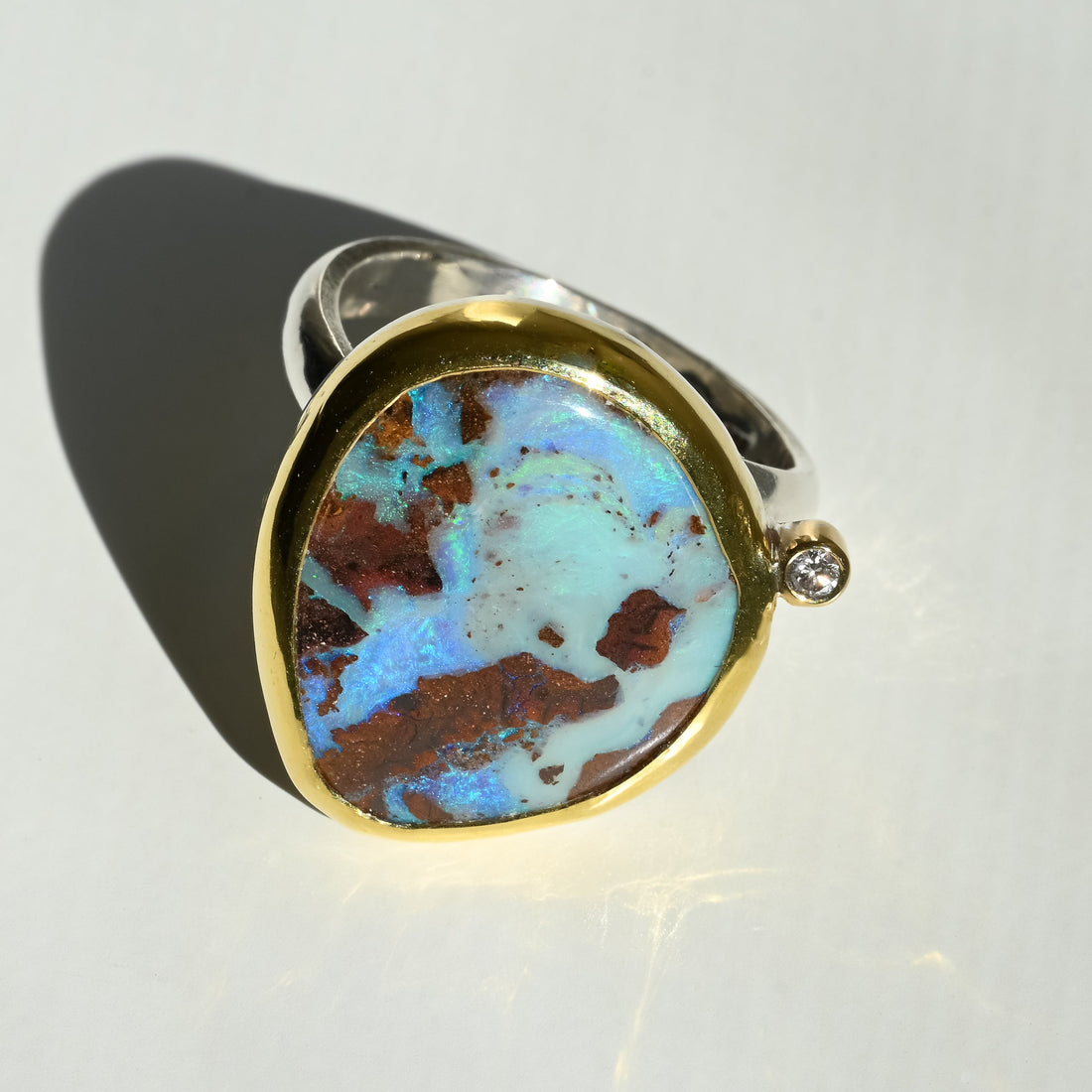
6 things you need to know before buying jewellery with gemstones
NataliaWe have been asked many times by customers if the sapphire in the ring is real?
Did you know that both lab-grown and natural sapphires are real?
What Are Lab-Grown Gems?
Lab-grown gems, also known as synthetic or man-made gems, are created in controlled laboratory environments that replicate the natural conditions under which gems form. These stones are chemically, physically, and optically identical to their natural counterparts.
What Are Natural Gems?
Natural gems are formed over millions of years under the earth’s surface through geological processes. Each stone is a product of nature’s unique blend of temperature, pressure, and mineral composition, which makes every gem distinct.
Key Differences Between Lab-Grown and Natural Gems
1. Origin
-
Lab-Grown: Manufactured in a lab using cutting-edge technology.
-
Natural: Mined from the earth, often from deep underground or riverbeds.
2. Cost
-
Lab-Grown: Typically 30–50% less expensive than natural gems.
-
Natural: Pricier due to their rarity and the cost of mining.
3. Environmental Impact
-
Lab-Grown: Generally have a smaller carbon footprint and reduce the need for mining.
-
Natural: Mining can cause significant ecological disruption and has been linked to ethical concerns.
4. Appearance
-
Lab-Grown: Virtually indistinguishable from natural gems to the naked eye.
-
Natural: May contain unique inclusions and imperfections that add character.
5. Resale and Rarity
-
Lab-Grown: Still emerging in the resale market; not as rare.
-
Natural: Often considered more valuable long-term due to scarcity and traditional appeal.
6. Pros and Cons
|
Feature |
Lab-Grown Gems |
Natural Gems |
|
Price |
More affordable |
Higher due to rarity |
|
Environmental Impact |
More sustainable |
Higher environmental cost |
|
Uniqueness |
More uniform |
One-of-a-kind characteristics |
|
Ethical Considerations |
Often more transparent |
Potential conflict issues |
|
Resale Value |
Currently lower |
Traditionally stronger market value |
|
Quality |
Generally, much higher quality and don’t have many inclusions |
Usually have inclusions |
Which One Is Right for You?
The choice between lab-grown and natural gems ultimately comes down to personal priorities. If you value sustainability, affordability, and cutting-edge technology, lab-grown gems offer a compelling alternative. On the other hand, if you're drawn to the rarity, tradition, and natural origin of gems, natural stones may hold greater appeal.
Final Thought
The rise of lab-grown gems is not about replacing natural stones—it’s about expanding choices for conscious consumers. Whether you're shopping for an engagement ring, a personal indulgence, or an investment, understanding these differences will help you select a gem that truly reflects your values and style.
For more on the gemstones we work with, see our complete guide to Australian opals and our guide to fine vs sterling silver. Below is a beautiful tourmaline ring with diamond (both natural)

for our full collection of jewellery with gems, click our opals, diamonds and gemstones collection
Frequently asked questions
How can I tell if a gemstone in jewellery is real?
What's the difference between precious and semi-precious gemstones?
Should I worry about treated gemstones?
See the pieces behind the story
Every NJewellery piece is handmade by Natalia on the NSW Central Coast — one of a kind, and gone when it’s gone.
Shop gemstone pieces →